Agentic AI vs Generative AI: 7 Key Differences & Examples
Understand Agentic AI vs Generative AI, their key differences, real-world applications, examples and how these AI technologies work together...
Read More
100% Online with Virtual Labs & Simulation Studios
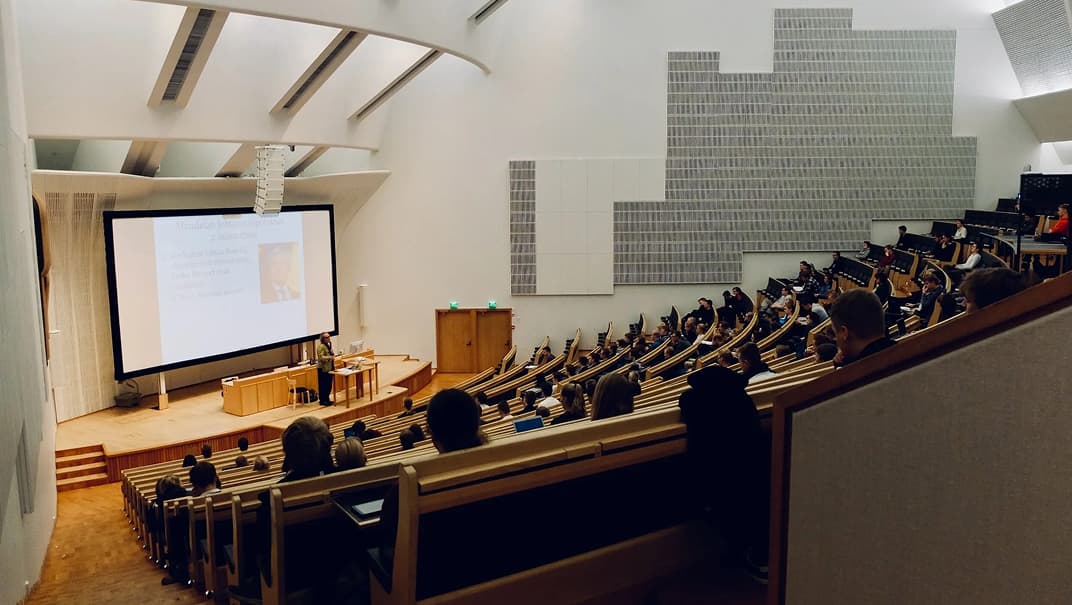
TThe Faculty of Engineering, Robotics & Applied Sciences (FERAS) at Woodcroft University redefines how engineering is learned in a digital world. Our programs blend theory, simulation, and virtual experimentation to prepare engineers for a future driven by automation, robotics, and intelligent systems.
Every course—whether a short professional certificate or a full doctoral program—is delivered through an interactive online model supported by cloud-based design tools, remote laboratories, and real-time collaboration platforms. Learners graduate with practical competencies ready for applications in manufacturing, renewable energy, mechatronics, construction technology, and advanced automation.
Programs developed for real-world engineering application through digital simulation.
Multidisciplinary curriculum connecting mechanical, electrical, civil, and automation streams.
Flexible progression from certificate to doctorate levels.
Faculty with strong research and industry backgrounds guiding every project.
Focus on sustainable, data-driven, and innovation-oriented engineering solutions.
Virtual internships and live capstone projects with global industrial partners.

Dean – Faculty of Engineering, Robotics & Applied SciencesWoodcroft University
Modern engineering is no longer confined to the workshop; it’s powered by simulation, automation, and global collaboration. Our faculty helps engineers design the future—virtually, intelligently, and sustainably.
Prof. Dr. Victor Alvarez
Students learn to prototype, test, and optimize systems using virtual design tools and simulation software mirroring real-world industrial conditions.
Graduates emerge as multidisciplinary professionals capable of managing smart manufacturing, automation systems, and sustainable engineering projects across industries.
The programs foster innovation in renewable energy, robotics, and IoT, encouraging research that builds efficient, ethical, and human-centric technologies.
Editorial note: If this section is used on a public-facing webpage, keep announcements and external links relevant to Woodcroft University content. Avoid unrelated third‑party event references.
Office of the Dean - Faculty of Engineering, Robotics & Applied Sciences

Covers circuits, power systems, renewable energy integration, and embedded electronics using digital simulation environments.

Focuses on thermodynamics, fluid mechanics, CAD modeling, and product design—all executed through 3D virtual labs.

Centers on robotic control systems, automation algorithms, sensors, and human-machine collaboration through online robotic simulators.
Research on smart grids, embedded systems, and advanced computational design.
Practice-based doctorate combining applied research with leadership in industrial innovation.
Integrates mechanical systems, sensors, and intelligent automation for next-generation robotics.
Deep dive into circuit design, power distribution, and energy efficiency with live online labs.
Explores autonomous control, embedded IoT architecture, and cloud-linked robotic systems.
Postgraduate program focusing on design thinking, CAD/CAM, and product lifecycle simulation.
Practical program covering PLCs, SCADA, and real-time process automation.
Teaches hardware-software integration and sensor-network configuration for connected devices.
Foundation program providing multidisciplinary technical skills for entry-level engineers.
Focuses on 3D modeling, visualization, and rapid-prototyping using professional CAD software.

Cloud-based lab suite for circuit design, mechanical simulation, and robotics coding.
Remote workstation for CAD drawing, prototyping, and rendering.
Virtual environment to test PLC logic, IoT sensor data, and process control systems.
Guided space for additive-manufacturing and product-development projects.
Platform connecting doctoral students with mentors on sustainability, robotics, and AI
Understand Agentic AI vs Generative AI, their key differences, real-world applications, examples and how these AI technologies work together...
Read MoreLearn how to become an AI engineer with essential skills, education requirements, a step-by-step roadmap, projects, and career opportunities...
Read MoreLearn what Multimodal AI is, how it works, its real-world applications, benefits, examples, and why it matters in today's AI-driven world.
Read More

 Our admissions team answers every message.